
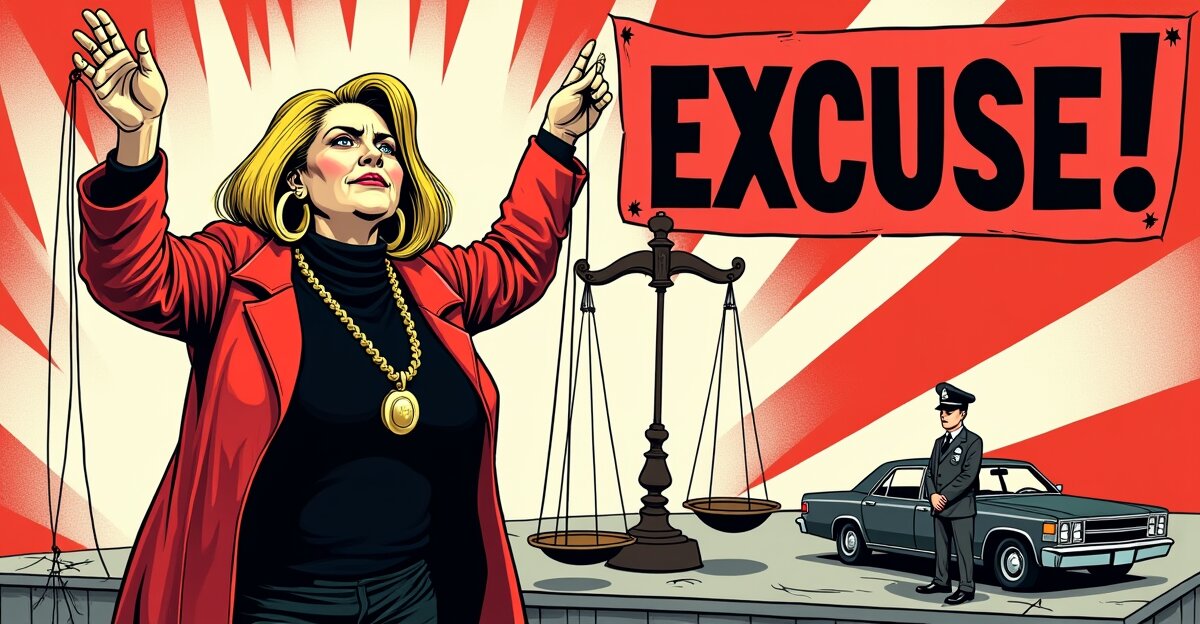
The state of Mississippi took exactly three sentences to explain a dead baby to the world, and not one of them was addressed to the family.
"I watched my baby take his first breath and I watched my baby take his last breath."
— Vel'lesiya Wiley, mother of Kohen Wiley, at a press conference in Senatobia, Miss., in June
The complete public verdict of the Mississippi attorney general's office on the death of Kohen Wiley, the one-year-old Black boy shot dead in a Walmart parking lot, reads as follows: "Today, the Office of the Attorney General announced it has completed the review of a June 14, 2026 incident in Senatobia involving one officer with the Senatobia Police Department. In this incident, the Attorney General's Office found the use of force was justified. Pursuant to Section 45-1-6 of the Mississippi Code, the review followed an investigation by the Mississippi Bureau of Investigation."
That is the whole of it. Three sentences. No name. No mention that the person who died was an infant. No condolence to the family. One word does all the load-bearing work in the document, and that word is "justified."
The family learned of the decision the way most of Mississippi learns its news: on Facebook. Veronica Roberson, Kohen's grandmother, told Mississippi Today she found out about the ruling on a social media post. No one from the state had called. No one, as it turns out, had ever interviewed her son's mother about the death of her child.
Here is what happened on June 14. It was a Sunday, the weekend before Juneteenth, the holiday that marks the end of slavery in the United States. Police were called to a Walmart in Senatobia, a small city just south of Memphis, Tennessee, on a report of shoplifting. The two-page incident log released to The Intercept said the allegedly stolen items were baby clothes and a pack of Pampers.
Latoya Ferrell was pulling out of the parking lot with Vel'lesiya Wiley in the passenger seat, Kohen on her lap. By the account of the Mississippi Bureau of Investigation, five officers ran out of the store, surrounded the silver sedan, and shouted at the women to stop the car. The car drove forward and nearly struck one of them. An officer opened fire.
Wiley's account differs on the final seconds. She says that when officers approached with their guns drawn, she lifted Kohen up to show them there was a child in the car. Ferrell was also hit, and was hospitalized. Kohen was pronounced dead at a local hospital. Neither woman has been charged with a crime.
The state's claim that the car was driven at officers has never been supported by anything the state has released. A medical examiner retained by the family's civil rights attorney, Ben Crump, concluded from the injuries and the path of the fatal bullet that the officer shot the baby from the side of the car, not the front. In the state's version of events, a one-year-old in a mother's lap is a threat.
Translation: the least remarkable detail in this case is the shoplifting report. It was a pack of Pampers.
The ruling came four months after the shooting. The MBI's work, which the Mississippi Department of Public Safety describes as a "thorough and impartial investigation," was finished and sitting on Attorney General Lynn Fitch's desk by mid-September. During those weeks, no one interviewed Vel'lesiya Wiley, the mother of the dead child, about her child's death.
Alex Gibert, the Department of Public Safety's press secretary, wrote in an email to The Intercept that the investigation "remains open and active." On a subsequent phone call, she said the part "involving the officer is closed." Asked whether investigators ever sought to interview Wiley, Gibert said she could not comment.
The body camera footage exists. For months, officials have promised it will be released, and it was not part of the ruling. On Tuesday, the state showed the family unredacted footage in a private screening, and the Department of Public Safety says the public will get it by the end of the week. A leaked version, posted by Darkhorse Press and verified by CBS News, shows the officers streaming out of the store, surrounding the car, shouting, and the car advancing. The state itself has released nothing.
The officer who fired the shots has been identified by the press as Sgt. Hunter Foster of the Senatobia Police Department, a white officer. He remains on the force, on paid leave. Days before the shooting, Mississippi Today reported, Foster was accused of making a racially offensive remark to a Black colleague, who has since left the department.
Foster is not the only man in this town with a documented history. The city's former chief, Richard Chandler, was fired in the summer of 2025; his replacement, interim Chief Harold Vanderford, was fired on September 1 after Mississippi Today published text messages in which he used the n-word more than a dozen times. Vanderford told the city the messages were created by artificial intelligence. The city's first instinct was to let him keep his job.
This is a department that, by resident testimony and local reporting, jailed a 10-year-old boy for public urination and violently arrested two sisters, ages 13 and 14, outside a public housing complex. According to the girls and their mother, then-Chief Chandler personally ordered one of them to "get your Black ass out of the road" before forcing her to the ground. On Mother's Day 2025, an officer in the same Walmart parking lot where Kohen Wiley would be killed forced a woman out of her car in front of her young children for sitting in a handicapped space. Black residents of Senatobia had been warning the city, in public, for years.
The killing of a one-year-old did not change the institution. It became its loudest case file.
The reaction has split along the line the state would most prefer. The Mississippi Legislative Black Caucus, led by state Rep. Kabir Karriem, demanded more information. "Kohen Wiley was a baby," Karriem said. "He posed no threat. He deserved protection, and he deserved a future. His family is owed more than a conclusion. Announcing that a review is complete does not fulfill the responsibility to explain how a police encounter ended with a baby dead." Crump asked the question the ruling refuses to answer: "How can anyone accept that conclusion when Kohen's family and the public still have not been allowed to see the body-camera footage? If the footage supports the state's decision, release it."
On the other side, the officer's attorney told the Associated Press that the driver had "tried to kill" his client and "had no choice but to fire his weapon." Patrick Lumumba, the local activist who has tracked the department's conduct for years, offered the version that has done the least work in this case: "If video footage would prove that, they would have released it the next day."
The state calls its process thorough and impartial. The family calls it a three-sentence verdict that arrived before a phone call. Both descriptions are of the same document.
In Senatobia, a new round of waiting has begun. The footage is coming, presumably by the end of the week. It may confirm the state's account of the car advancing, or it may not. The sequence of events, though, is already set: the verdict was rendered first, the family was contacted second, and the evidence is still on its way.
That sequence is the story. Not whether a baby died on a Sunday before a holiday named for the end of slavery, but what a state does with that fact once it holds it. Mississippi took three sentences. It did not call the mother. It left the officer on paid leave, and it kept the video.
The question was never whether the state would find a way to close the file. The question is what "justified" was supposed to justify.
Comments (0)
No comments yet. Be the first to speak up.
Join the Riot
Login with Google to leave a comment.
Login to Comment