The anti-corporate health movement held its flagship summit in a luxury hotel ballroom, and the health industry was the guest of honor.
"She initiated that contact, I shall make clear, doctor."
— Russell Brand, MAHA Summit, two weeks before his rape trial
On Tuesday, September 29, a crowd gathered in the ballroom of the Waldorf Astoria in Washington, D.C. The fruit was out. The sparkling water was cold. The Secret Service swarmed the lobby.
They had come to the movement's second annual Make America Healthy Again summit.
Make America Healthy Again. The movement that rose against the health-industrial complex. The movement built on the idea that pharma, insurers, and food conglomerates had all failed America. The movement that, according to President Trump, helped him win the 2024 election.
It then handed its flagship event to the health-industrial complex.
And the health-industrial complex showed up.
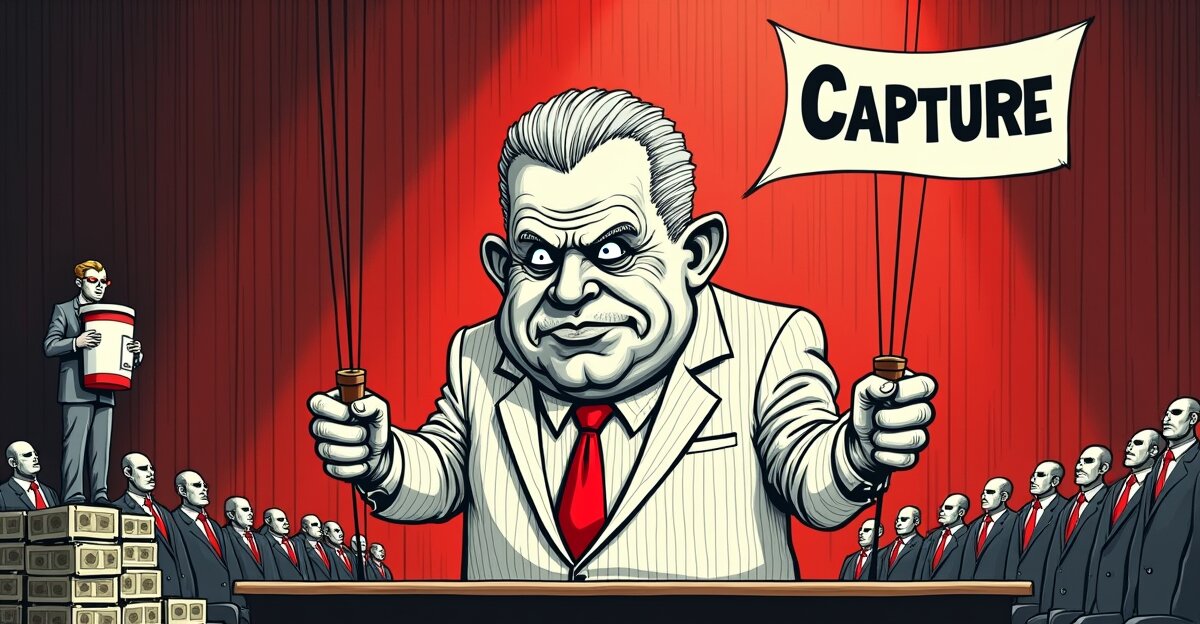
The summit was organized by Kennedy's allies at MAHA Action, but the schedule had the fingerprints of Big Health all over it.
On the affordability panel sat executives from UnitedHealth, Elevance, and AHIP, the insurer trade group, there to make the case for prior authorization and to tout artificial intelligence as the answer. On the food panel, counselor to the health secretary Stefanie Spear sat with the executives of Walmart, Steak 'n Shake, and Sweetgreen to discuss the future of the American diet. The acting FDA commissioner showed up for a panel called "Modernizing MAHA regulation." A longevity evangelist led the audience through a "biological age test," which consisted of standing on one leg with their eyes closed.
The movement that promised to take on the insurance lobby hosted the insurance lobby giving the pitch.
The talent was just as surprising.
Russell Brand, the comedian and self-declared MAHA convert, moderated a panel called "Reform in CMS." Brand has pleaded not guilty to seven counts of rape and sexual assault. His trial in London begins October 12.
Midway through the panel, Brand cracked a joke about hugging Brooke Rollins, the secretary of agriculture. Mehmet Oz, who now runs the Centers for Medicare and Medicaid Services, riffed on it. "Russell Brand was backstage hugging Brooke Rollins," Oz said. "MAHA just took on an entirely new level of meaning."
Brand leaned into the microphone. "She initiated that contact, I shall make clear, doctor."
The crowd was not amused.
Oz followed it up with what may be the summit's defining line. He told the room that as long as at least 75 percent of health spending is driven by chronic disease, American health care cannot be made affordable. The United States, he said, spends at least twice as much per person as other countries.
"Because we're twice as fat," he added.
It was not the only time a convicted or accused sex offender took the stage. Mike Tyson, convicted of rape in 1992 and sentenced to three years, led a discussion later in the day. The ballroom was mostly full.
The screening at the MAHA Summit was rigorous. It was just not the kind you would expect.
The New York Times and The Washington Sun were denied press credentials, and one reporter posted from outside the doors. But the influencer circuit got in. The celebrity circuit got in. The man facing a rape trial got in and moderated a panel about reforming federal health bureaucracy.
In the lobby, organizers handed out swag bags. Inside were pea protein packets from RollinsGreens and a hand strengthener from Gameday Men's Health.
There was no line for the press. There was a line for the protein.
The political math was on display, too.
Vice President JD Vance headlined the summit for the second year running. In a fireside chat with Health and Human Services Secretary Robert F. Kennedy Jr., Vance got into the carnivore diet that Kennedy has recommended. "I called Bobby," Vance told the crowd. "And he's like, 'No, no, no. Have I got the thing for you.' And that was Fat Tuesday, and thanks to Bobby Kennedy, Fat Wednesday never came."
Near the end, Kennedy asked Vance why Secretary of State Marco Rubio gets all the "good memes." It was a 2028 question wearing a meme costume. The vice president and the secretary of state are circling the 2028 White House, and the MAHA movement, which polling puts at more than a third of the country, is a piece both want.
Kennedy's own summit message had a different flavor. To a room full of industry, he said artificial intelligence is "better informed" than doctors.
Secretary of State Marco Rubio, for his part, is not on the carnivore diet. On a recent podcast appearance he said the Pop-Tart "is one of the great American innovations in history," and added, "I'm not gonna travel the world with a cooler full of sauerkraut."
The cracks were visible from the stage.
MAHA supporters fought the administration over glyphosate, the pesticide that mobilizes the movement's anti-chemical wing, after Trump signed an executive order earlier this year expanding its production. The fight ended with a Supreme Court ruling against MAHA. A Florida nurse who attended said the panels "seemed to be about bureaucracy being big business," and that "that's not the core of what the MAHA movement is."
That same Tuesday, Michigan Senate nominee Abdul El-Sayed launched a rival health platform aimed directly at MAHA voters, betting that the health-conscious third of the country is not automatically Republican.
Tony Lyons, the head of MAHA Action, called the day "an all-of-government answer to a crisis that is the defining crisis of our generation."
The audience heard him over the sound of swag bags being opened.
The movement that hated Big Health now hosts Big Health. The question is who is hosting whom.
MAHA was built on the idea that the health establishment failed America. The summit gave America a chance to watch the establishment, wearing the movement's sash, take a bow.
Comments (0)
No comments yet. Be the first to speak up.
Join the Riot
Login with Google to leave a comment.
Login to Comment