Twenty-three years after the WMD lies that sent a generation into Iraq, the United States is being told again that a bomb is coming to Washington, D.C., this time aimed at the president's own inner circle.
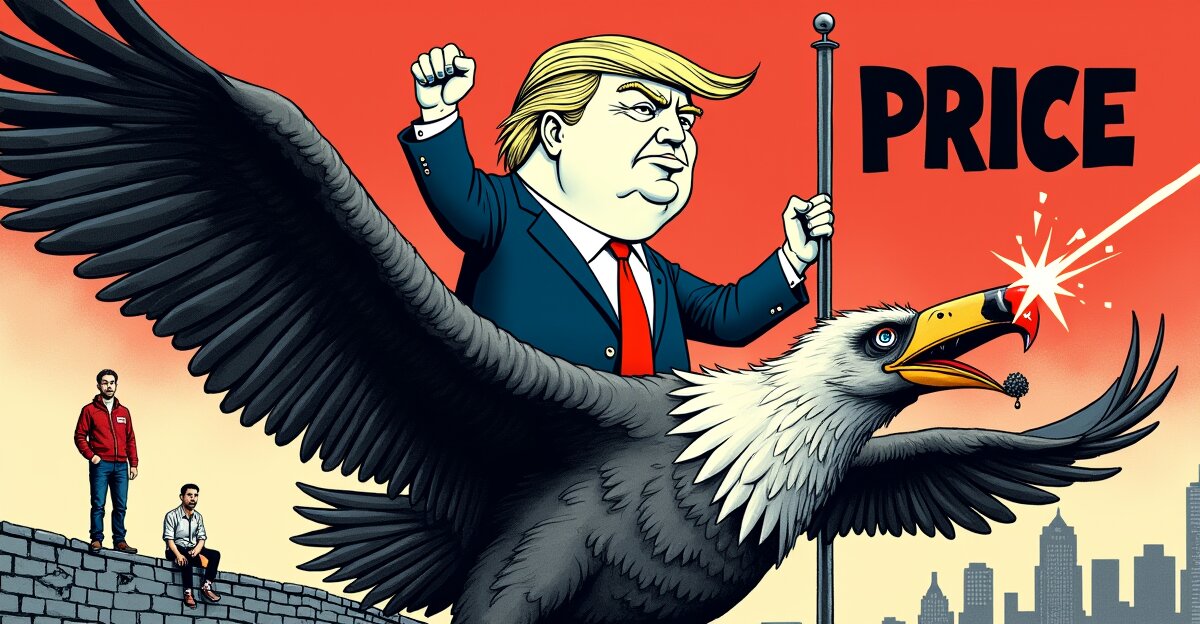
"If there is [a threat], they will pay a price the likes of which no country has ever paid before. We take it very seriously because they happen to be crazy."
— President Donald Trump, to reporters in Manila on Tuesday, as he arrived for the ASEAN-U.S. summit
The report landed on a Monday. CNN, citing seven unnamed U.S. officials, said new intelligence indicates that Iran is "developing plans to target senior Trump administration officials by detonating a so-called dirty bomb or a chemical weapon in Washington, D.C." The network added that officials "continue to debate whether Iran can or will attempt to execute such a plot." A dirty bomb is not a nuclear weapon. It is a conventional explosive loaded with radioactive material, built to terrorize and contaminate rather than to annihilate. But the label does the same work the label did in 2003. It turns an uncertain future into a present emergency.
The sourcing carries the fingerprints of the old playbook. Two of CNN's sources said the plotting "has been very specific and includes locations and targets," and that it "has sparked a flurry of US contingency planning." Another described the Iranian planning as, "for now, an effort to give itself options rather than an indicator of an imminent attack." In other words, the intelligence says Iran is building options, and the administration is already acting as if one of them has been selected.
White House spokesperson Lauren Bis told CNN that the United States is "monitoring any and all potential threats, but at this time there are no credible threats to the homeland." A representative for Iran's mission at the United Nations said Tehran "categorically rejects and unequivocally refutes the false and fabricated allegations," and a foreign ministry spokesperson called the report "baseless."
Translation: the same intelligence apparatus that sold Iraq is now selling a radioactive future for downtown Washington, and the president is already pricing the damage.
The president's response came the next morning, from the tarmac in Manila. He warned Tehran of a price "the likes of which no country has ever paid before," and said the United States takes the threat seriously "because they happen to be crazy." He spoke as the U.S. sent a third aircraft carrier into the Middle East, and as his vice president, JD Vance, assured Fox News that the president would not let the conflict drag into a "forever war."
The war with Iran is now nearly nine months old. It began without a declaration and has continued without the authorization Congress is supposed to control. Last month, Benjamin Netanyahu lost his majority in the Israeli Knesset. Then came the midterms. Trump's Republicans lost both chambers, and Democrats take over in January. With a government funding deadline looming next month, Senators Elizabeth Warren, Tammy Duckworth, and Kirsten Gillibrand have already unveiled an amendment to defund the war "until this conflict is authorized by Congress, as the Constitution requires."
Warren put it plainly: "The American people have spoken loud and clear: End the war with Iran and lower costs."
Nobody in the room was more ready to recognize the script than the journalists covering it. Sam Biddle, a technology reporter at The Intercept, wrote on X that "the urban 'dirty bomb' threat was one of the great chimeras of peak War on Terror America, and I guess it's back!" Laila Al-Arian, executive producer of Al Jazeera's "Fault Lines," said the coverage was "giving Iraq WMDs reporting." Omar Baddar, a progressive analyst, said it "gives 'Saddam WMDs' vibes."
The comparison is not an exaggeration, and it is not new. In the run-up to the 2003 invasion, the Bush administration built its case on weapons of mass destruction that never materialized. The bomb was the argument. The invasion was the answer. The bodies were the bill. Two decades later, the machinery has not changed its mind about what a phantom is for.
The only new thing about this bomb is whose officials it would kill.
The unease is not only outside the government. The officials CNN spoke with disagreed over the intelligence's credibility, and nothing pointed to an imminent attack. One source told the network, "Whether they actually have the personnel in place to execute is a matter of debate." That is a remarkable sentence to read in a week in which the president has called the enemy "crazy" and the consequences "unprecedented." The people closest to the warning are arguing about whether it is real, and the man they serve has already chosen his answer.
Because the same day the phantom bomb was reported, the United States was doing something far less speculative. It was sentencing a real man for the real plot to kill a president.
Asif Merchant, a Pakistani citizen and operative for Iran's Revolutionary Guard, was convicted in March of attempting an act of terrorism transcending national boundaries and of murder for hire. He is to be sentenced Tuesday in Brooklyn federal court, where prosecutors are asking for life in prison plus ten consecutive years. His handler called him by the code name "Amer." Before each of roughly fifteen meetings at an IRGC safehouse in Tehran, Merchant was told to pull the battery from his phone and seal it in a bag. Prosecutors said Merchant believed he was being recruited to kill Donald Trump, then a presidential candidate, though the target could have been Joe Biden or Nikki Haley.
The sentencing memo reads like a spy thriller that was never edited. In the Tehran safehouse, the handler drew a political rally on a whiteboard and marked the angles from which the hitmen should shoot the politician at the podium. The plan called for a staged protest as a distraction. Merchant was told the killers should be "criminals or mafia members" and that the killing should happen at a rally in America. Between May 1 and May 10, 2024, he searched "trump upcoming events" at least fourteen times and looked up the address of a New Jersey rally on Google Maps. He hid a status report in a gift bag and had his daughter text his handler from a phone hidden in their home in Pakistan.
And the timing. Merchant was arrested on July 12, 2024, the day before a gunman opened fire on Trump at a rally in Butler, Pennsylvania. When agents told him about the shooting, Merchant said it was "the same thing he was sent here to do." The memo does not connect him to the shooter, who officials said appeared to have acted alone.
His lawyers argued the scheme was so poorly conceived that it amounted to an "Inspector Clouseau" movie. Prosecutors answered that this was exactly the response the IRGC was hoping for, because the group recruits many operatives in the hope that one succeeds, counting on the failures being written off as blunders. The bomb in the intelligence report may be a chimera. The bomb in the sentencing memo is a man in a courtroom, and it was aimed, precisely, at the man in the Oval Office.
So here is the picture, in full. A president at war with a country he calls crazy is being told by his own intelligence that the country is planning a mass-casualty bomb against his inner circle, while his own officials argue about whether the intelligence is real, while the country denies it, while the journalists who cover it recognize the 2003 script, and while, the same week, a court file thick with whiteboards and gift bags hands him a real plot to kill him.
The question is not whether this bomb is a phantom. The question is what a phantom is for. In 2003, the answer was a war. If the pattern holds, the answer this time will be the same, with a new flag and a higher price tag, and the American people will be told they have no choice but to pay it.
Comments (0)
No comments yet. Be the first to speak up.
Join the Riot
Login with Google to leave a comment.
Login to Comment