
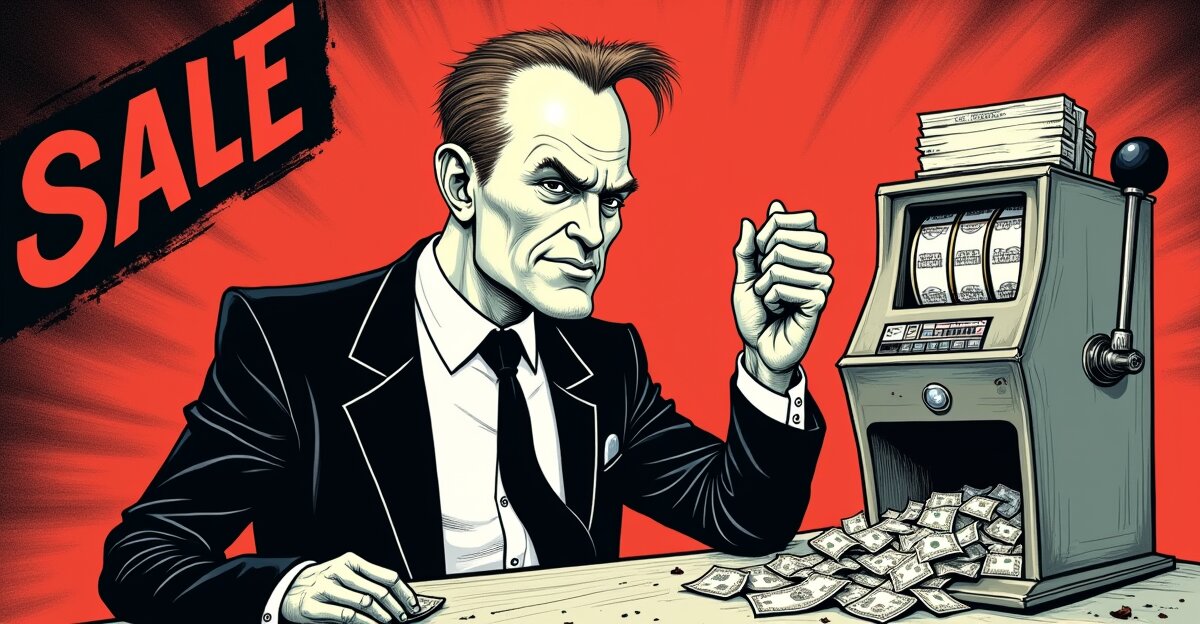
Four days before the midterms, corporations have already spent $737 million to buy them, and the only lever left is one line on a Montana ballot.
"They are spending to buy influence, determine outcomes, and shape policy."
- Robert Weissman, co-president of Public Citizen, on the record corporate spending disclosed this week
The American election season has always shipped with a fine-print confession: the money is bigger than the voters. But even by the standard of a season in which the first trillionaire in history is personally wiring nine figures into the races, the numbers Public Citizen published this week deserve their own paragraph.
Federal campaign finance filings show that for-profit corporations have spent $737.3 million trying to shape the 2026 midterms. That is 60% more than the $461 million they spent across the entire 2024 presidential cycle, the previous record. It is more than four times the $184.1 million they spent in the 2022 midterms. And it is more than 40% of the $1.8 billion corporations have poured into federal elections since Citizens United gave them the legal right to do it.
In 2010, the first cycle of the Citizens United era, corporate spending totaled $12.8 million. That is a rise of roughly 5,700% in sixteen years. A single midterm season, still days from the vote, now outspends the entire 2024 presidential campaign that put Donald Trump back in office.
Translation: the midterms are no longer a contest that voters attend. They are an acquisition that corporations fund.
The money is not coming from vague corporate America. It is coming from a handful of industries with very specific regulatory anxieties. Crypto corporations have contributed $233 million. Online betting companies have contributed $85.2 million. Big Tech, plus companies with stakes in artificial intelligence and data centers, has contributed $73.1 million. Together those three sectors account for $391 million, more than half of the entire surge.
Each of them has built its own super PAC, and the names read like a mission statement. Fairshake has funneled $106.9 million. Win for America, $80.7 million. Leading the Future, $50.1 million. Public Citizen calls them "corporate supremacist" PACs: committees structured to put the interests of their business backers ahead of either party or any candidate. They show up in Democratic primaries and Republican primaries alike, backing whoever resists the regulation they fear and attacking whoever does not.
Follow the biggest donors and the agenda writes itself. Andreessen Horowitz leads all corporate givers at $76 million, mostly to super PACs fighting AI and crypto regulation. Fossil fuel companies, led by Energy Transfer and Chevron, gave $51.4 million. The Koch organization gave $36.8 million, largely to Americans for Prosperity. Tobacco, led by Reynolds American and Altria, gave $34.8 million.
The sectors most afraid of regulation are the sectors most eager to buy the people who write it.
The biggest single beneficiary of all this corporate cash is not a party. It is a PAC. Trump's MAGA Inc. super PAC has collected $141 million from corporations, 19% of all corporate giving this cycle and 31% of the $449 million it has raised in total. Republicans as a bloc are outspending Democrats by more than $300 million, and much of that gap is one donor.
Elon Musk, the first trillionaire, is by most accounts the largest single political donor in modern American history. Public Citizen's own tally puts his political spending this cycle above $400 million; a Washington Post analysis puts it closer to half a billion. This summer he gave the Senate Leadership Fund $158 million in a single contribution, one of the largest individual donations in U.S. political history. His America PAC has poured $8.6 million into the Michigan Senate race, most of it against Abdul El-Sayed.
And somewhere in Michigan, a Republican candidate is telling his donors what that buys. A leaked fundraising email from Senate candidate Mike Rogers, posted by the state's Democratic Party, makes the quid pro quo explicit: "When you stand with my Senate campaign today, you are directly shielding Elon Musk, protecting the movement to audit the federal government, and stopping this socialist retaliation plot dead in its tracks." The closing line: "Please, make an immediate, urgent contribution right now to protect Elon and save America."
That is not a donation appeal. It is an invoice.
The legal scaffolding here is older than most Americans. In 1912, Montana voters passed an initiative barring corporations from spending money on elections, one of the earliest state bans of its kind in the country. It held for nearly a century. Then the courts, following the Supreme Court's Citizens United ruling, struck it down, and the door opened everywhere.
The fix everyone keeps proposing is a constitutional amendment. Rep. Pramila Jayapal introduced the We the People Amendment. Sens. Jeanne Shaheen and Bernie Sanders are pushing the Democracy for All Amendment, which would let Congress and the states cap or prohibit corporate election spending. Amendments are designed to be nearly impossible, of course, and the election is in four days.
So Montana is trying something else: attack the charter, not the speech. Initiative 194, on the November 3 ballot, would bar corporations, nonprofits, unions, and trade associations from spending to support or oppose candidates or ballot measures. The teeth are the part other states will study. Companies that violate it could forfeit their state-granted privileges, including the limited liability that is the whole point of the corporate form.
The strategy already has a name: the Montana Plan. It is the first serious attempt in sixteen years to undo Citizens United without waiting on the Supreme Court or a two-thirds Congress.
Whether it passes, and whether it survives a court challenge, is anyone's guess. Montana's legislature has already passed a related disclosure law, Act 11, and it faces two constitutional challenges before it takes effect. If Initiative 194 fails, the precedent dies quietly, and the next state that wants in starts over from scratch.
If it passes, something new enters the American playbook: a state telling corporations, in writing, that if they want to keep their limited liability, they can keep their money off the elections. The companies that spent $737 million to buy the 2026 midterms will find out, in about a month, whether one state decided it would rather do business without a price tag.
The rest of the country can watch. Or it can copy. The receipts are already public, filed with the Federal Election Commission, and they read less like a list of campaign donors than a shareholder register for the government.
The midterms are not close. The spending says who already paid. In four days, forty-five states will ratify the invoice, and one state gets to reject it. That is the whole election, compressed. Outside the Supreme Court, a protester once held a sign that read Democracy Is Not for Sale. Montana gets to try to make it true.
Comments (0)
No comments yet. Be the first to speak up.
Join the Riot
Login with Google to leave a comment.
Login to Comment