
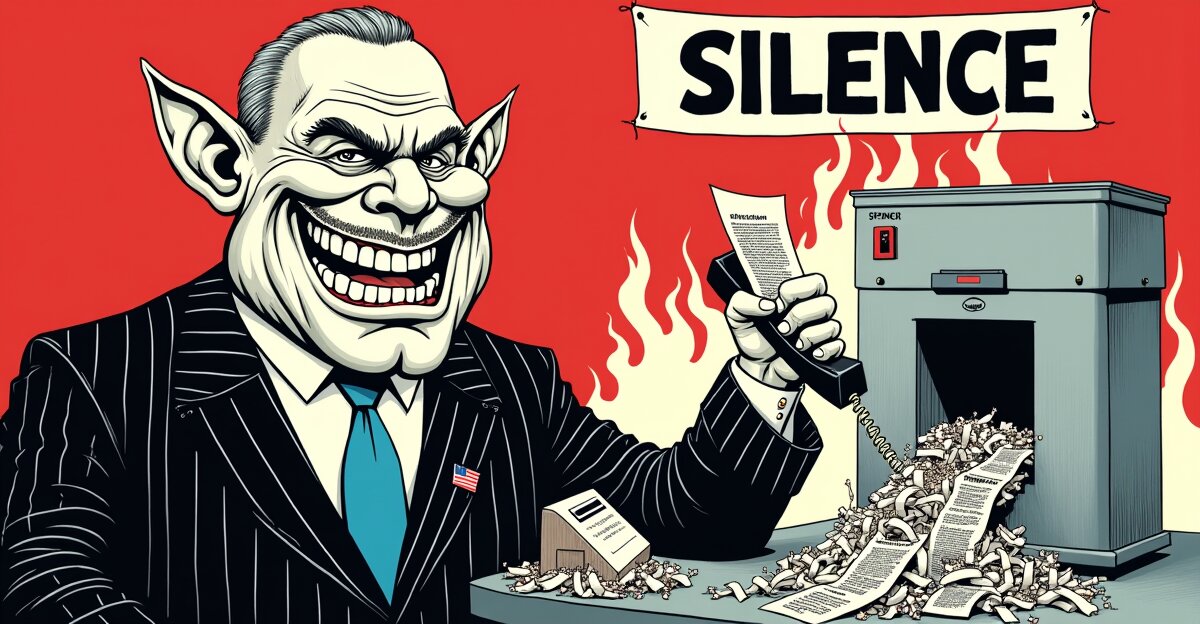
A foreign president called to warn the Israeli prime minister about an attack that was coming. Three years later, the prime minister swears the call never happened, and is suing the newspaper that found it.
"The National Security Council and the Military Secretary meticulously reviewed the Prime Minister's call log for those days, and found no trace of it whatsoever."
— Benjamin Netanyahu, statement posted to X, September 9, 2026
A newspaper in Israel ran a story on Tuesday that had the shape of a bomb, and on Wednesday the man at the center of it did the only thing he has left to do in a functioning democracy. He sent in his lawyers.
Haaretz published extracts from an upcoming book, Hostages: 843 Days of Abandonment, by the journalists Shlomi Eldar and Ruth Yuval. The book's central claim is this: in the final days of September 2023, days before Hamas attacked on October 7, the president of the United Arab Emirates, Mohammed bin Zayed, called Benjamin Netanyahu and told him directly that Hamas was preparing a major operation. According to the book, Netanyahu reacted with "relative calm."
According to the book, he then did not tell his domestic security chief, his intelligence chief, or his army's chief of staff that a foreign head of state had just called about it.
The warning, as the book reconstructs it, has a strange and very specific chain of custody. Yahya Sinwar, then Hamas's leader in Gaza, reportedly told a Palestinian intermediary known to Haaretz as "coal eyes," a Fatah member trusted by both Hamas and Israel's Shin Bet service, that he was preparing "the mother of all surprises. A terrifying operation. Something extraordinary." In another version of the message, the advice was simply to expect an "earthquake."
The intermediary carried the message to bin Zayed. Bin Zayed and his aides, the book says, read it as a sign of an imminent full-scale attack. A representative of the UAE embassy then went to the prime minister's office carrying a special phone, to make sure the conversation would stay confidential. On that call, bin Zayed expressed concern that the coming event would not only produce bloodshed but "destabilise the entire region," and advised Netanyahu to find "an economic solution" for Gaza and calm the West Bank to prevent escalation.
Netanyahu reassured him. Israel was prepared for any scenario, he said. In his own assessment, Hamas intended to operate in the West Bank. The book reports that bin Zayed also passed the warning to Israel's Shin Bet agency, which dismissed it, and relayed the conversation to the then CIA director, William J. Burns. And then, apparently, it was over.
In the long inventory of October 7 failures, this is the one where the entire failure is a phone call.
The denial is, in its way, the more remarkable document. In a statement posted to X on Wednesday, Netanyahu called the report "fabricated" and "false," with "clear political timing, as part of the left's election campaign." His office called it a "sinister plot." Likud accused Haaretz of "blatant foreign interference in Israel's elections."
And then there is the call log. The National Security Council and the Military Secretary, the statement says, meticulously reviewed the prime minister's call log for those days and found no trace of the call. A phone call, it turns out, is the kind of event that can leave no trace on a call log. A meticulous review is the kind of review that can find no trace of a meticulously documented call.
Netanyahu went further. He claimed the person responsible for Haaretz's "false report" was Muhammad Dahlan, a Palestinian political exile who lives in Dubai, the capital of the country that allegedly placed the call. Dahlan's representatives rejected the claim. It is the one detail in the story where the geography works out.
Haaretz has stood by its reporting. The newspaper says the threatened lawsuit has a "sole purpose," which is "to silence journalistic criticism," and its lawyers called the report "the product of an in-depth journalistic investigation and is based on sources pertaining to an issue of paramount public importance."
The UAE's response is a masterclass in diplomatic negative space. Its foreign ministry said it "does not comment on media stories or speculation regarding conversations between government leaders," and added that "UAE and Israeli government entities have maintained open and direct lines of communication since the inception of the relationship more than five years ago," and that "when necessary, all relevant intelligence has been and continues to be communicated between the relevant entities."
The UAE was careful to confirm that it shares intelligence with Israel. It was less eager to confirm that it did so on this particular occasion.
The timing is no accident. Israel's Knesset election is October 27, and the polls have made it what it is: a referendum on Netanyahu's leadership, with him trailing and his fiercest challenger Gadi Eisenkot, the former chief of staff of the Israeli army, who has spent three years arguing that Netanyahu was warned about October 7 and ignored everything.
After the Haaretz report, Eisenkot joined Naftali Bennett, Avigdor Lieberman and Yair Golan in a joint statement that "Netanyahu and his partners in the 7 October government are unfit to continue in office," and that they would work to "prevent them from leading to another disaster."
Another disaster. Four politicians, one sentence, and you can tell how much of the next two weeks is already in the past tense.
The stakes in the book's claims are not theoretical. On October 7, 2023, at least 1,195 people were killed in Israel and 251 taken hostage. In the war that followed, at least 73,670 Palestinians have been killed in Gaza, according to the territory's health ministry, whose figures the United Nations considers reliable. The book also reports that in the immediate aftermath of the attack, Hamas offered to release every civilian it had taken, asking nothing in return, and that Israeli officials turned the offer down. Netanyahu, who has resisted an independent public inquiry into that day for three years, is now asking a court to stop a newspaper from telling you what he knew.
The report broke the same day the United Kingdom announced sanctions against illegal settlements in the occupied West Bank, a move Israel answered by ordering the closure of the British consulate in East Jerusalem. Two stories about what the outside world knows, and what Israel is doing about it, sharing a front page.
A phone call either happened or it did not. The book says a foreign president called a prime minister and told him the ground was about to open, and the prime minister's entire rebuttal is that a log of his calls contains no trace. That is not an answer to the question of what he knew. It is a question about the log.
The question was never whether the call was made. The question is whether, after 73,000 dead, the man who got the warning is still the man in charge of the warning.
Comments (0)
No comments yet. Be the first to speak up.
Join the Riot
Login with Google to leave a comment.
Login to Comment