
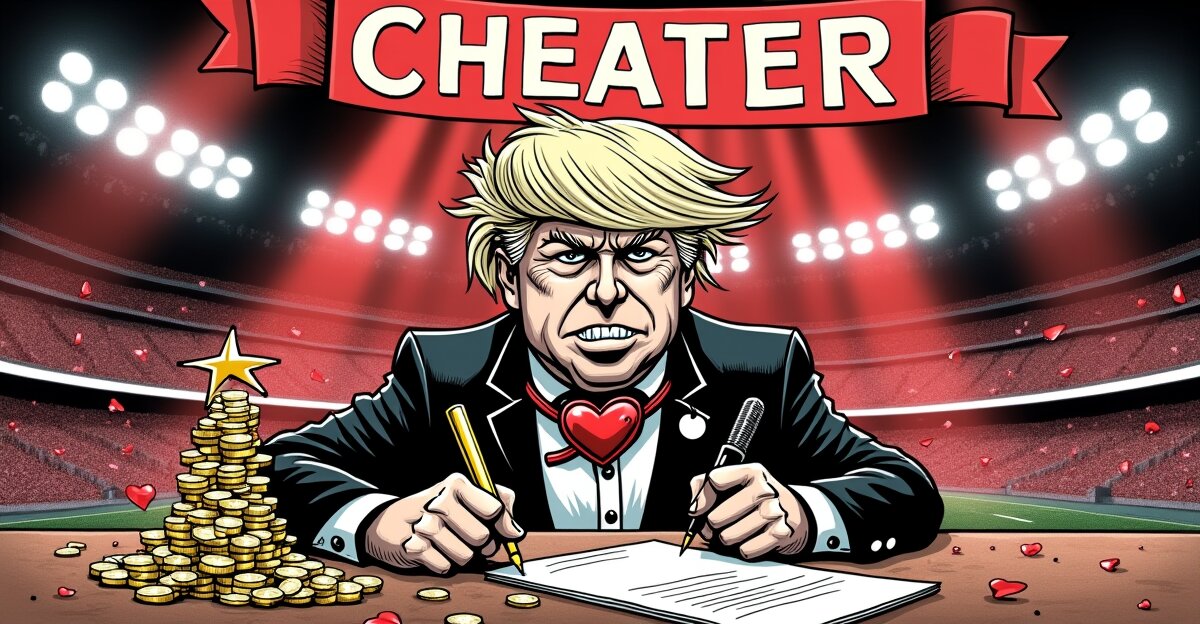
The New York Times spent five months re-reading 903 stories to answer a question no one wanted to ask: was the reporter cheating on the newsroom.
"Russini's relationship with Vrabel was in clear violation of The Athletic's standards. Regardless of whether the relationship was romantic, it was a breach and should have been disclosed."
— Mike Semel, editorial director for standards at The Athletic, in the report published Thursday
On a Thursday in September, ahead of the Patriots' season opener, The Athletic published the findings of an internal probe that had been quietly running since April. The conclusion, delivered by standards director Mike Semel, walked a line most newsrooms would envy: the former NFL insider had broken its rules, yet had not, so far as he could tell, broken her work.
The probe had begun the day Page Six published photographs of Dianna Russini holding hands and embracing Mike Vrabel at a Sedona, Arizona resort during the NFL owners' meetings. Russini, then The Athletic's senior NFL insider, said the pictures missed the context of a larger group trip. Vrabel called any suggestion of impropriety "laughable." Within a week she had resigned. But the company kept going.
The numbers are the part that should make you pause. Semel reviewed 903 stories, 77 videos, and 204 episodes of the "Scoop City" podcast that Russini co-hosted, and interviewed 14 staffers who had worked alongside her. He did not, one source told ESPN, speak with Russini herself.
The math, as he laid it out, is almost reassuring. Of those 903 pieces, roughly 46 mentioned Vrabel or the Patriots, about five percent. Of those 46, nearly all were transactional, trades, hires, cuts, mostly co-bylined, none a scoop. Her sourcing, according to the people who worked next to her, ran wide across owners, general managers, coaches, and agents. "Russini's work was seldom reliant on Vrabel as a source or subject," Semel wrote.
In other words: no evidence of bias, no proof she had fed the man she was covering the good stuff before everyone else. The newsroom's credibility, on the reporting itself, survived the audit.
Translation: the investigation could not find a single story she had cooked. It found, instead, a woman who had hidden a relationship, and a newsroom that only caught it because a gossip tabloid happened to be watching.
What it did find was messier than a clean exoneration.
Semel flagged a "What I'm Hearing" column from November 2023 in which Russini declared Vrabel's job with the Titans secure, citing "multiple conversations with high-ranking Titans officials." The Titans fired him two months later. "No other media came out as strongly about Vrabel's job security," the report noted, while conceding it could not prove the conversations never happened. It was, he wrote, "difficult to prove."
Then there was the prose. A 2025 column on Vrabel's return to Tennessee against the team that had discarded him was, by Semel's own word, "gushing," full of lines like "Nobody ever questioned who the Titans were when Mike Vrabel was their leader." The investigation's verdict on the writing was a small, damning admission: "in hindsight are awkward or even uncomfortable." Gushy, perhaps, but not unique. Fox and ESPN were writing similarly warm pieces that same week. The report pointed that out, too.
The one story that genuinely warranted an editor's note was a late blurb on the Titans' decision to go for two, detailed enough to describe what Vrabel and an assistant had for dinner the night before and the exact scenario they had discussed. Access like that, from a source the paper was supposed to be detached from, is the kind of thing standards exist to stop.
The photographs, meanwhile, had their own quiet timeline that the report leaned on without fully resolving.
In April, after the first Sedona images, Page Six surfaced a second set taken six years earlier, inside a dim Manhattan bar in March 2020, when Vrabel was still coaching in Tennessee and Russini was at ESPN. An eyewitness told the tabloid the pair were "all over each other," giving "pecks, a bunch of pecks, constantly," and that Vrabel's wedding band was visible. At the time, Russini was engaged; she married a Shake Shack executive in September of that same year, a child on the way. Each of them is married to someone else, each with two kids.
The report's authors were explicit that they "neither completed an investigation nor reached any conclusion about the nature of the full relationship." The violation, they insisted, was not proven romance. It was the appearance, the undisclosed closeness, the fact that she waited two days before telling her editors and then offered a story "that did not align with facts." That second detail, the small cover-up, is the one that matters for the industry, because it is the one that turns a judgment call into a breach.
The most revealing sentence in the entire affair may be the one about who did not get investigated.
The NFL declined to open any probe into Vrabel. The coach, for his part, addressed the mess once, before the draft, and announced he would seek counseling, missing day three of the draft to do it. He kept his job, his contract, and his locker room. On Thursday, asked for a reaction to the published findings, his answer was three words and a shrug. "No, I don't have any reaction. We're moved on."
Two people, one relationship, two entirely different endings. Russini, the one who was supposed to be reporting, is out, her career in the game effectively over. Vrabel, the one who was supposed to be reported on, is heading into week one with a rebuilt Patriots roster and no asterisk on his résumé. The institution that holds power in the league chose to look at the reporter and look away from the coach, a decision that tells you exactly where the money and the leverage sit.
The Athletic, for its part, proposed modest reforms: a 30-minute standards check at onboarding, tighter conflict-of-interest guidelines, and a warning that editors should grow wary when the same source keeps showing up. It was a calm, professional response to a chaotic moment, and it was also, quietly, a confession. The rules were there. They simply ran on "employee honor, candor and transparency," and one of those employees ran out.
The question is no longer whether the reporter crossed a line. It is who gets to decide where that line runs, and why the man on the other side of it got to keep the keys.
The opening teaser promised an answer about a newsroom's integrity, and The Athletic gave one: the reporting held, the person did not. But the deeper story is the one the league never wrote. A standards department can spend five months and 903 stories proving a journalist didn't cheat her readers. It cannot, and does not, get to ask whether a head coach cheated his team. That power belongs to the owners, and the owners, as always, protected the asset and let the outsider absorb the damage.
The ballroom is being built, the season is starting, and Vrabel says he's moved on. So, the report suggests, should everyone else, once the editor's notes go up and the guidelines get a little tighter. But a newsroom that has to prove, in writing, that one of its own was honest, has already admitted what the photographs never needed to: trust, once withheld, is the one thing the story can't put back.
Comments (0)
No comments yet. Be the first to speak up.
Join the Riot
Login with Google to leave a comment.
Login to Comment